






April 22, 2025
Having a well-structured and feature-rich website is crucial for any business or individual aiming to establish an online presence. A website should be more than just aesthetically pleasing; it must be functional, user-friendly, and optimized for conversions. In this guide, we’ll walk you through the essential features every website needs to ensure a seamless user experience and achieve its intended goals.
📌Brand Name and Logo
Why are your brand name and logo essential?
Your brand name and logo are the first things visitors should notice when they arrive on your website. They are key to establishing brand recognition and trust. Your brand name should be prominently displayed on your home or landing page—ideally at the top, in the middle, or left corner—so it’s immediately visible without scrolling.
Tips for Enhancing Brand Presence:
- Strategic Placement: Make sure your brand name is placed at the top of every page, ideally in the header. This ensures it’s always visible as users navigate your site.
- Consistent Branding: Use a logo that complements your brand name and visually represents your business. This helps in creating a lasting impression.
- Professional Design: If you’re still developing these elements, consider hiring a graphic designer to create a polished and professional logo that encapsulates your brand’s identity.
📌Personalized Domain Name
Why is a personalized domain name important?
Your domain name is one of the most important features in a website address—it’s how people find you online. A personalized, concise domain name closely related to your brand makes your site easy to locate and share. It also enhances your credibility, as using a free domain (with the host’s name included) can make your site appear less professional.
Tips for Choosing the Right Domain Name:
- Keep It Simple: Choose a domain name that’s easy to spell and pronounce. This helps users remember and share it easily.
- Be Unique: While keeping it simple, ensure your domain name is unique enough to stand out from the competition.
- Consider Purchasing: If your preferred domain name is taken, you might need to buy it from the current owner or consider alternative names that are still closely related to your brand.
📌Clear and Concise Navigation
Why is website navigation important?
Navigation acts as the roadmap for your website, guiding users to different sections. If visitors can’t easily find what they’re looking for, they’re likely to leave your site in frustration. Clear and concise navigation ensures that users can explore your website effortlessly, enhancing their overall experience.
Tips for Effective Navigation:
- Use clear and descriptive labels: Your menu items should be straightforward, so users immediately know where each link will take them.
- Limit the number of menu items: Avoid overwhelming users with too many choices. Keep your menu streamlined.
- Include a search bar: A search bar provides quick access to content, especially on content-heavy websites.
- Ensure consistency: Keep the navigation layout the same across all pages to avoid confusing users.
📌Responsive Design for All Devices
What is a responsive website design?
A responsive design automatically adjusts your website’s layout based on the device being used, whether it’s a desktop, tablet, or smartphone. With more people accessing websites on mobile devices, responsive design is crucial for providing a seamless user experience.
Benefits of Responsive Design:
- Enhanced user experience: Users will have a consistent experience, regardless of the device they’re using.
- Improved SEO rankings: Search engines like Google favor mobile-friendly websites, boosting your visibility.
- Reduced bounce rates: When your site looks good on all devices, users are more likely to stay and explore.
📌Fast Loading Speed
How does loading speed affect website performance?
Loading speed is a critical factor in user experience and SEO. A slow website can lead to high bounce rates, meaning users leave your site before it fully loads. Research shows that users expect a website to load in under 3 seconds.
Ways to Improve Website Speed:
- Optimize images and videos: Compress and resize media files to reduce their load time.
- Minimize scripts and plugins: Too many scripts and plugins can slow down your site. Keep only the essentials.
- Use a reliable hosting service: A good hosting provider can significantly impact your site’s speed.
- Implement caching and CDNs: Browser caching and content delivery networks help load your site faster for returning visitors.
📌Search Engine Optimization (SEO) Basics
How does SEO impact website visibility?
SEO is essential for ensuring your website ranks well on search engines like Google. By optimizing your site’s content, structure, and technical elements, you can improve your visibility and attract more organic traffic.
Basic SEO Tips:
- Relevant keywords: Use keywords that your target audience is searching for in your content.
- Optimize meta titles and descriptions: These appear in search engine results and can influence click-through rates.
- Mobile-friendly design: Ensure your site is optimized for mobile devices, as this affects your SEO ranking.
- Improve site speed: Faster websites tend to rank better on search engines.
📌Calls to Action (CTAs)
What makes a strong CTA?
A Call to Action (CTA) is a prompt that encourages visitors to take a specific action, such as signing up for a newsletter, purchasing a product, or downloading a free resource. Effective CTAs are vital for guiding visitors through the customer journey.
Tips for Crafting Effective CTAs:
- Be Clear and Direct: Use actionable language that tells the visitor what to do next (e.g., “Buy Now,” “Sign Up Today”).
- Stand Out: Use contrasting colors and bold fonts to make your CTA buttons stand out from the rest of the content on the page.
- Strategic Placement: Place CTAs in high-visibility areas, such as above the fold or at the end of key content sections, to maximize engagement.
- Test and optimize: Experiment with different CTAs to see which ones perform best.
📌High-Quality Content and Readability
Why is content quality crucial for a website?
Content is the backbone of your website. High-quality, relevant, and engaging content keeps visitors on your site and encourages them to return. Readability is also key—content should be easy to read, with a clear hierarchy and well-structured paragraphs.
Tips for Effective Content:
- Compelling headlines: Use attention-grabbing headlines to draw users in.
- Concise paragraphs: Keep sentences and paragraphs short for better readability.
- Visual elements: Incorporate images, infographics, and videos to break up text and keep users engaged.
- Regular updates: Keep your content fresh and relevant by updating it regularly.
📌Contact Information and Social Media Links
Why should contact information and social media links be prominent?
Having clear contact information and social media links helps build trust and makes it easy for visitors to reach out. Whether they have questions, want to collaborate, or simply want to connect with your brand on social media, this information should be easy to find.
Tips for Displaying Contact Information:
- Consistency is Key: Place your contact details in the header or footer of each page so that visitors can easily find them regardless of where they are on your site.
- Social Media Integration: Include social media icons that link to your profiles. Placing these in the footer is common practice, encouraging visitors to engage with your brand on other platforms.
- Use Contact Forms: Instead of just listing an email address, consider adding a contact form. This allows visitors to send messages directly through your website, making the process more convenient.
📌Secure Socket Layer (SSL) Certificate
What is an SSL certificate and why is it important?
An SSL certificate encrypts the data exchanged between a user’s browser and your website, providing a secure connection. This is especially important for websites that handle sensitive information, such as personal data or payment details.
Benefits of SSL Certificates:
- Enhanced security: Protects your users’ data and builds trust.
- Improves SEO rankings: Google favors secure sites, which can boost your search engine ranking.
- Essential for e-commerce: If you’re selling products or services online, an SSL certificate is a must.
📌Live Chat Support
How does live chat improve user experience?
Live chat provides immediate assistance to visitors, which can enhance their experience and increase conversions. It’s particularly useful for e-commerce sites, where users may have questions about products or shipping.
Benefits of Live Chat:
- Instant support: Address user queries in real time, reducing bounce rates.
- Increases conversions: Guide users through the purchasing process with live assistance.
- Enhances customer satisfaction: Provide a direct line of communication, making users feel valued.
📌User Testimonials and Reviews
Do testimonials impact user trust?
Yes, testimonials and reviews are powerful tools for building trust and credibility. They provide social proof that your products or services are reliable and have satisfied customers.
How to Effectively Use Testimonials:
- Strategic placement: Place testimonials on key pages, such as the homepage or product pages, where they’ll have the most impact.
- Use authentic photos: Include customer photos and names to make the testimonials more credible.
- Highlight positive reviews: Showcase glowing reviews to reinforce the value of your offerings.
📌Analytics and Tracking Tools
Why are analytics important for a website?
Analytics tools like Google Analytics provide valuable insights into user behavior, helping you understand what’s working and what needs improvement. This data can guide your content strategy, marketing efforts, and overall website optimization.
Key Metrics to Track:
- Page views and unique visitors: Understand how many people are visiting your site.
- Bounce rate: Track the percentage of visitors who leave after viewing only one page.
- Conversion rates: Measure how effectively your site converts visitors into customers or leads.
📌About Us Page
What makes an About Us page effective?
Your About Us page is where you tell your brand’s story, share your mission, and introduce your team. It’s a chance to connect with your audience on a personal level, which can build trust and loyalty.
Tips for Crafting a Compelling About Us Page:
- Tell Your Story: Share your brand’s history, mission, and values. Be authentic and let your personality shine through.
- Introduce Your Team: Include bios and photos of your team members. This humanizes your brand and helps visitors connect with the people behind the business.
- Use Visuals: Incorporate images or videos that tell your brand’s story, such as photos from company events or milestones.
📌Footer with Essential Links
What should be included in a website footer?
The footer is often an overlooked part of a website, but it is crucial in providing additional navigation and essential information. A well-designed footer can improve user experience and SEO.
Essential Footer Elements:
- Links to key pages: Include links to your privacy policy, terms of service, and other important pages.
- Contact information: Reiterate your contact details and social media links.
- Sitemap: Provide a link to a sitemap or include links to major sections of your site.
📌Blog
Why should your website have a blog?
A blog is a powerful tool for driving traffic to your website and establishing your brand as a thought leader in your industry. By regularly publishing high-quality, relevant content, you can attract potential customers through search engine queries.
Tips for a Successful Blog:
- Focus on Quality: Create informative, engaging, and relevant content to your target audience. Avoid fluff and aim for value.
- SEO Optimization: Use SEO best practices to ensure your blog posts rank well on search engines. This includes using relevant keywords, optimizing meta descriptions, and including internal and external links.
- Consistency is Key: Regularly update your blog with fresh content to keep your audience engaged and improve your site’s SEO.
📌FAQs
How can an FAQ section benefit your website?
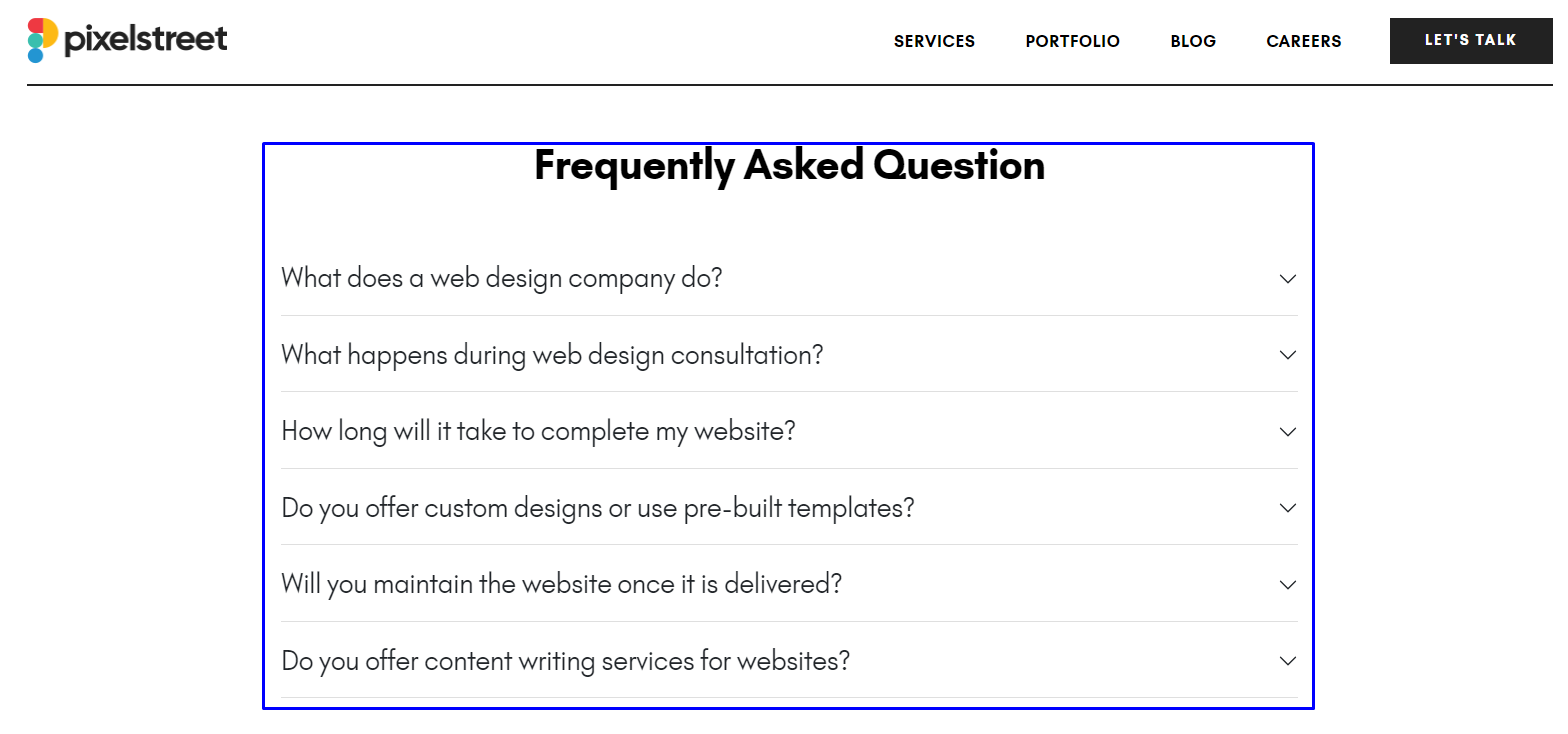
A well-organized FAQ section answers common questions that visitors may have, reducing the need for them to contact you directly. It also improves user experience and can even boost your SEO by targeting specific long-tail keywords.
Tips for a Helpful FAQ Section:
- Identify Common Questions: Think about the most frequent inquiries you receive and address them in your FAQ section.
- Keep It Concise: Provide clear and concise answers. Visitors are looking for quick solutions, so avoid long-winded explanations.
- Organize by Category: If your FAQ section is extensive, organize it into categories to make it easier for users to find what they’re looking for.
📌Search Functionality
Why is search functionality important?
Including a search bar on your website improves user experience by helping visitors quickly find the information they’re looking for. Studies show that users who use search functionality are more likely to convert.
Tips for Implementing Search Functionality:
- Make It Accessible: Place the search bar in a prominent location, such as at the top right corner of the page, where users expect to find it.
- Optimize for Speed: Ensure that your search functionality is fast and efficient. Slow or inaccurate search results can frustrate users.
- Include Filters: If you have a large amount of content, consider adding filters or categories to help users refine their searches.
Final Thoughts
Creating a website that effectively serves its purpose involves more than just good design—it requires thoughtful consideration of the features that enhance usability, security, and engagement. By including these essential features, you can ensure your website is user-friendly and optimized for search engines, ultimately driving more traffic and achieving your business goals.
Ready to transform your website with expert design and strategy? Contact the best web development company in Kolkata to bring your vision to life and stand out in the digital landscape.