






August 30, 2024
Have you ever wondered how businesses manage to pop up just when you need them, no matter where you are? As the digital landscape evolves, so do the ways businesses can reach you. But what exactly is happening behind the scenes?
Introduction to SEO and GEO
Search Engine Optimization (SEO) has long been the backbone of digital marketing strategies. As search engines continue to evolve, so do the methods marketers use to increase visibility and drive organic traffic.
While traditional SEO relies on tried-and-true tactics like keyword optimization, content creation, and backlink building, a new era of search optimization is emerging—one powered by artificial intelligence and machine learning.
GEO is revolutionizing how businesses approach content creation and search optimization. Instead of relying on static keywords and manual content updates, GEO leverages AI to generate dynamic, personalized content that adapts in real-time.
This blog will explore what GEO is, how it differs from traditional SEO, and why it’s poised to become the next big thing in digital marketing.
Understanding Traditional SEO (A Quick Recap)
Before diving into GEO, it’s essential to understand the foundations laid by traditional SEO. Traditional SEO involves optimizing websites and content to rank higher on search engine results pages (SERPs). This includes:
Keyword Research: Identifying keywords with high search volume and low competition to target within your content.
On-Page SEO: Optimizing meta tags, headers, and content to align with targeted keywords.
Off-Page SEO: Building backlinks and improving social signals to increase domain authority.
Technical SEO: Ensuring your website is fast, mobile-friendly, and easy to navigate for both users and search engine bots.
Traditional SEO has evolved with Google’s algorithm updates, prioritizing quality content, user experience, and semantic search.
However, it still requires significant manual effort and time to yield results. This is where GEO steps in, offering a more automated and adaptive approach.
What is Generative Engine Optimization (GEO)?
Generative Engine Optimization (GEO) uses artificial intelligence and machine learning to generate, improve, and distribute content that is individualized for every user according to their needs and what they may be searching for at that moment.
Unlike traditional Search Engine Optimization (SEO), which follows established theories and guidelines, Generative Engine Optimization (GEO) is constantly evolving. GEO adapts its texts based on user behaviour. It also adjusts according to trends or patterns in society.
Core Components of GEO
Generative AI Models: At the heart of GEO are advanced AI models like GPT (Generative Pre-trained Transformer) and BERT (Bidirectional Encoder Representations from Transformers). These models analyze vast datasets, understanding language contextually and generating content that aligns with specific search intents.
Dynamic Content Generation: GEO takes personalization to a whole new level. Instead of serving the same content to every user, GEO tailors content dynamically based on individual user preferences, search history, and contextual data. This means every user could experience a different version of your content, optimized specifically for them.
Automated Optimization: GEO doesn’t just stop at content creation. It continuously monitors performance metrics, search trends, and user engagement, making real-time adjustments to improve rankings and relevance. This reduces the need for constant manual updates and SEO audits.
How Generative Engine Optimization Leverages AI and Machine Learning
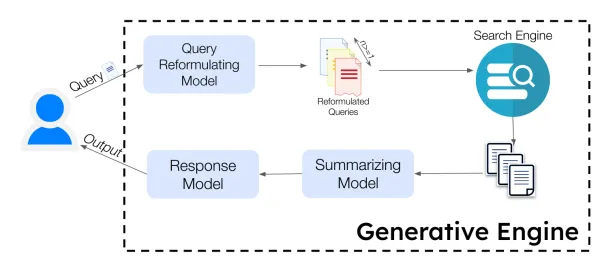
GEO is built on AI’s ability to process and analyze data at a scale that humans simply can’t match. By integrating machine learning, GEO can predict user intent more accurately and generate content that resonates with those predictions.
For example, if a user frequently searches for content related to “sustainable fashion,” GEO can adapt content in real time to emphasize eco-friendly practices, even if that wasn’t a primary focus of the original content.
This level of adaptability is what sets GEO apart from traditional SEO, which relies on static content that must be manually updated to stay relevant.
Key Differences Between GEO and Traditional SEO
To truly understand the potential of GEO, let’s compare it directly with traditional SEO across key areas:
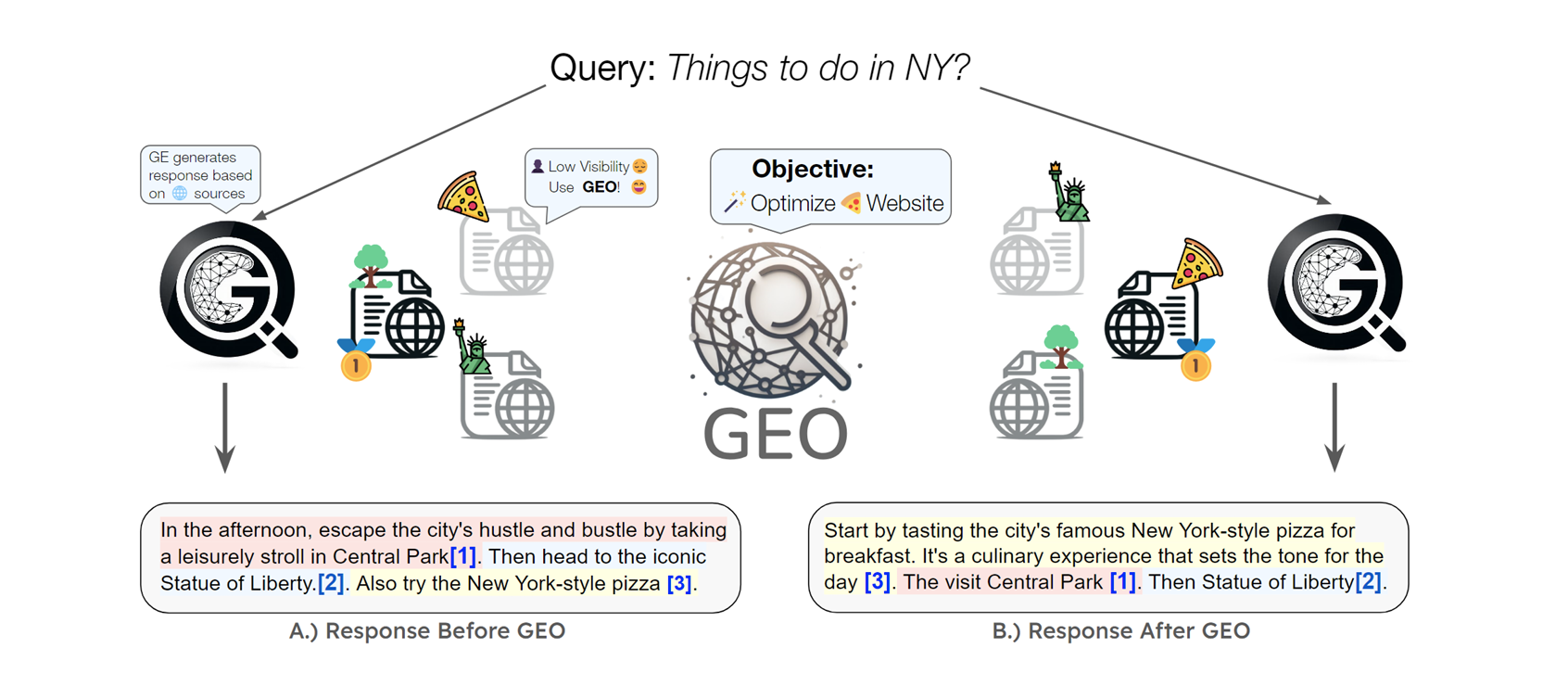
Approach to Content Creation

Source: foundationinc
Traditional SEO: Content creation in traditional SEO is a manual process. Marketers conduct keyword research, make content around those keywords, and periodically update it based on performance metrics. The content is typically static, requiring manual intervention for updates.
GEO: Content creation in Generative Engine Optimization is driven by AI. Instead of creating static content, GEO uses generative AI to produce content on the fly, dynamically adapting it based on user preferences, contextual data, and real-time trends. The result is highly personalized content that remains relevant without constant manual updates.
Keyword and Content Strategy
Traditional SEO: Traditional SEO relies heavily on predefined keyword lists. Marketers optimize content around specific keywords identified through research. Once the content is live, it’s relatively fixed and requires periodic updates as keyword trends change.
GEO: GEO shifts the focus from static keywords to contextual understanding. It doesn’t rely on fixed keywords; instead, it generates content that adapts based on the user’s search intent and context. This dynamic approach allows for more nuanced and relevant content delivery, regardless of the search term used.
User Experience and Interaction
Traditional SEO: User experience in traditional SEO focuses on optimizing site structure, navigation, and engagement metrics like bounce rate and dwell time. It’s about creating a solid foundation that meets both user and search engine expectations.
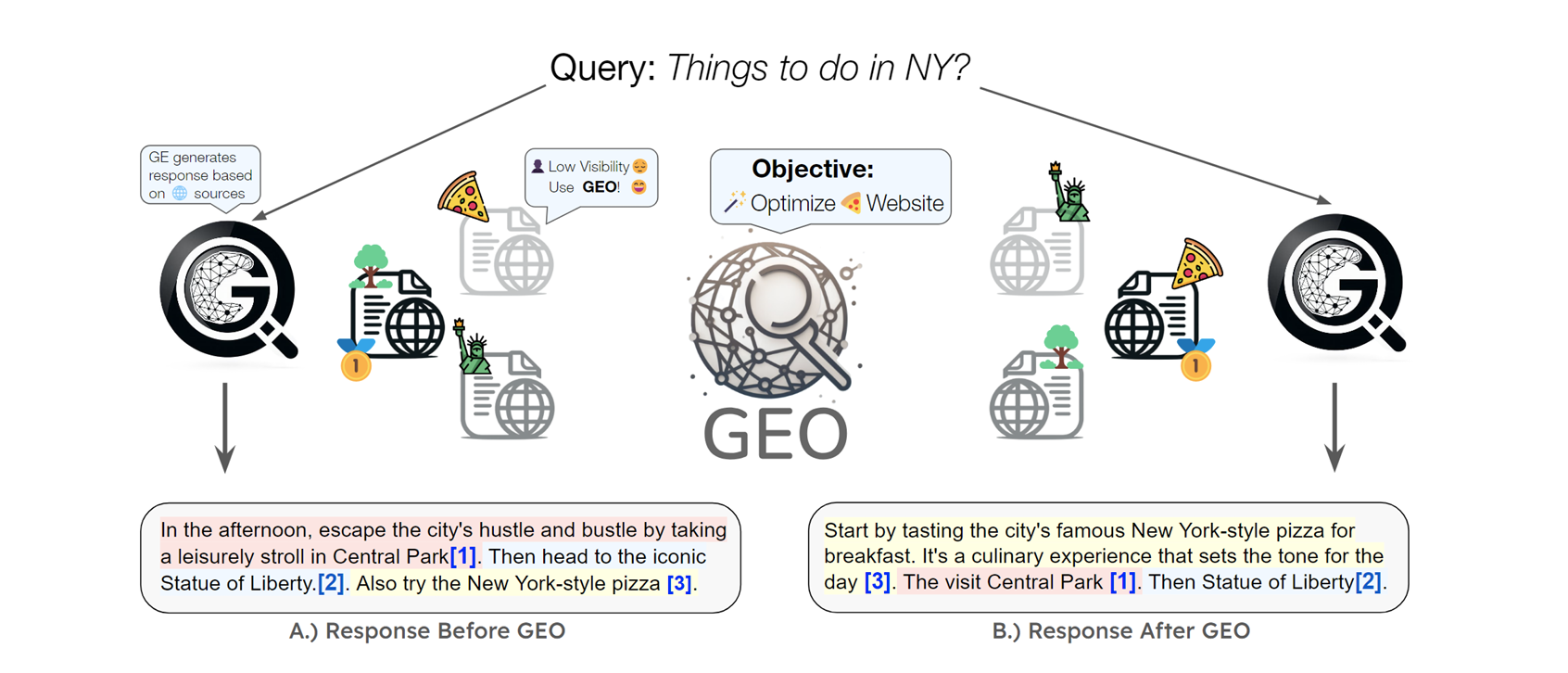
Source: foundationinc
GEO: GEO takes user experience to the next level by predicting user needs and delivering personalized content and interactions. Through AI-driven insights, GEO can adjust content layout, recommendations, and even visual elements based on what it predicts will resonate most with the user. This leads to more engaging experiences and improved user satisfaction.
Technical Aspects and Tools
Traditional SEO: SEO professionals rely on tools like Google Analytics, SEMrush, and Ahrefs to conduct audits, track performance, and identify optimization opportunities. Much of the work involves manual updates, analysis, and strategy refinement.
GEO: GEO automates much of the technical optimization process. AI algorithms continuously monitor site performance, user engagement, and search trends, making real-time adjustments. This reduces the need for manual intervention and allows marketers to focus more on strategy and creativity.
Benefits and Challenges of GEO Compared to Traditional SEO
Benefits of GEO
Scalability and Efficiency: One of the most significant advantages of GEO is the ability to scale content production rapidly without sacrificing quality. AI can generate content at a pace that would be impossible for human teams, making it easier for businesses to expand their content marketing efforts.
Hyper-Personalization: GEO’s AI-driven personalization enables content to be tailored to individual users at a level traditional SEO can’t match. This enhances engagement, leading to higher conversion rates and more satisfied customers.
Real-Time Adaptation: Traditional SEO requires constant monitoring and updating to stay relevant. GEO, however, adapts to changes in search behavior, trends, and algorithms automatically. It’s a living, breathing optimization process that continuously evolves.
Challenges of GEO
AI Accuracy and Reliability: The effectiveness of GEO is directly tied to the accuracy of the AI models used. Poorly trained models or outdated algorithms can lead to irrelevant or low-quality content, which can harm rankings and user experience.
Content Quality Concerns: While AI-generated content has improved, it can still lack the creativity, emotional depth, and nuanced understanding that human writers bring. This raises questions about the balance between automation and human touch in content creation.
Ethical and Transparency Issues: AI-generated content brings up ethical considerations around transparency, authenticity, and potential biases. Users may feel misled if they are unaware that content is AI-generated, and there is a risk of perpetuating biases inherent in the datasets used to train AI models.
Practical Applications of Generative Engine Optimization
Is GEO Replacing Traditional SEO?
GEO is not about replacing traditional SEO but improving it. Traditional SEO remains essential for foundational optimization, strategic content planning, and ensuring websites meet technical requirements. However, GEO adds a layer of intelligence and adaptability that traditional methods lack. The combination of both approaches can yield the best results, providing the stability of traditional SEO with the agility and personalization of GEO.
Impact on Business Performance and SEO Metrics
Businesses that integrate GEO into their strategies often see improvements in key performance metrics like engagement, conversion rates, and user retention. By delivering personalized, relevant content at scale, GEO can drive better results while reducing the manual workload associated with traditional SEO.
Comparing GEO and Traditional SEO Outcomes
While traditional SEO excels in building long-term authority and domain strength, GEO is better suited for delivering real-time, personalized experiences. A balanced approach that combines both methods allows businesses to leverage the strengths of each, optimizing for both stability and adaptability.
Future Trends and Implications for GEO
Emerging Trends in GEO
As AI and machine learning technologies continue to advance, the potential applications of GEO will expand. We can expect to see more sophisticated generative models capable of creating highly engaging, contextually relevant content. Additionally, as search engines continue to evolve, GEO will play a central role in shaping the future of SEO strategies.
Implications for Digital Marketers
Digital marketers will need to adapt to this new landscape by embracing AI-driven tools and strategies. GEO requires a shift in mindset—from focusing on static, keyword-driven content to embracing dynamic, context-driven personalization. However, this doesn’t mean abandoning traditional SEO. The most successful strategies will be those that find the right balance between both approaches.
Final Thoughts
Generative Engine Optimization is more than just a trend—it represents a fundamental shift in how we approach search optimization and content creation. By leveraging the power of AI and machine learning, GEO offers a level of adaptability, scalability, and personalization that traditional SEO simply can’t match.
However, traditional SEO is not going away. It remains crucial for building a solid foundation and ensuring long-term visibility and authority. The future of digital marketing lies in combining the strengths of both traditional SEO and GEO. For businesses looking to stay competitive in a rapidly changing digital landscape, now is the time to explore the possibilities of GEO and integrate it into a holistic SEO strategy.
Are you making the most of these powerful tools? If you’re not sure where to start, consider consulting with the best digital marketing company in Kolkata which can help you optimize your efforts and ensure that your business stays ahead of the curve.